

Monteverdi’s modernity
A text by Lambert Colson
Monteverdi’s Vespers of the Blessed Virgin have for many years inspired an exceptional level of interest among performers and musicologists alike. Their dedication to Pope Paul V, the monumental scale of the work, its extraordinary vocal and instrumental virtuosity, and the astonishing variety of the fourteen compositions gathered in the 1610 print make it one of the undisputed monuments of music history. Here, Monteverdidisplays a unique mastery of virtually every compositional style of his age. From falsobordone to the most dazzling vocal virtuosity, fromrecitative to the most intricate polyphonic textures, from plainchant accompanied by organ to the luxuriant sonorities of concerted ensembles, heelevates the aesthetic ideal of varietas to heights rarely equalled.
Yet this apparent familiarity is deceptive. The Vespers are among the most frequently performed and recorded works of the early Baroque, yet paradoxically they remain one of the most elusive. Behind the apparent certainty of a masterpiece lies an object whose present form may be asmuch the product of four centuries of performance history as of Monteverdi’s own original intentions.
Over the past decades, each generation of performers has sought to make the work more coherent, more spectacular, or more closely aligned with its understanding of historical practice. Performing forces have been expanded or reduced, instrumentations reconstructed, tempi reconsidered, the order of pieces reorganized, and liturgical solutions simplified or replaced. All of these transformations were motivated by a sincere desire forfidelity. Yet together they have gradually produced a genuine interpretative tradition, one that can sometimes become a filter standing between usand the work itself.
The challenge presented by the Vespers, therefore, does not seem to us to be that of producing yet another version, but rather of returning certainquestions to their point of origin. What exactly are we performing when we perform Monteverdi today? Which elements belong to the work itself,and which belong to the history of its interpretations?
These questions have been explored in close collaboration with Jeffrey Kurtzman, author of the pioneering 1978 dissertation on the Vespers and ofthe landmark study The Monteverdi Vespers of 1610: Music, Context, Performance, as well as with Licia Mari, a specialist in musical life at theGonzaga court in Mantua. Recent scholarship has allowed us to reconsider a number of fundamental issues: the precise role of the sacri concentus(Nigra Sum, Pulchra Es, Duo Seraphim, Audi Coelum), the liturgical organisation of the collection, questions of pitch, transposition, and theperforming forces that Monteverdi may actually have envisaged.
Our approach has therefore gradually moved away from the idea of “restoring” a canonical masterpiece and toward a process of reconstruction.The aim is not to recover a hypothetical ideal or definitive version of the Vespers, but rather to recreate the conditions under which this musiccould generate meaning.
The version presented here is rooted in a specific context: Mantua at the time of the publication of the 1610 print. The plainchant has been reconstructed from an antiphonary preserved in the diocesan archives of Mantua and specifically associated with the rite of the Palatine Basilica ofSanta Barbara. The programme as a whole has been conceived as the reconstruction of a Vespers service for the Feast of the Assumption ratherthan as a simple sequence of concert pieces.
One of the most fascinating aspects of this undertaking concerns the central role of the organ. Monteverdi was among the first composers to provide such detailed indications regarding instrumentation, ornamentation, and even organ registration. InAlto performs with a copy of the organ built by Paolo Cipri in 1578, an instrument contemporary with Monteverdi whose sonic aesthetic profoundly transforms our perception of ensemble balance. The organ supports both voices and instruments with remarkable clarity while remaining strikingly transparent. Its presence atthe centre of the musical fabric invites us to reconsider a number of questions concerning balance which have long fuelled debates surrounding thework.
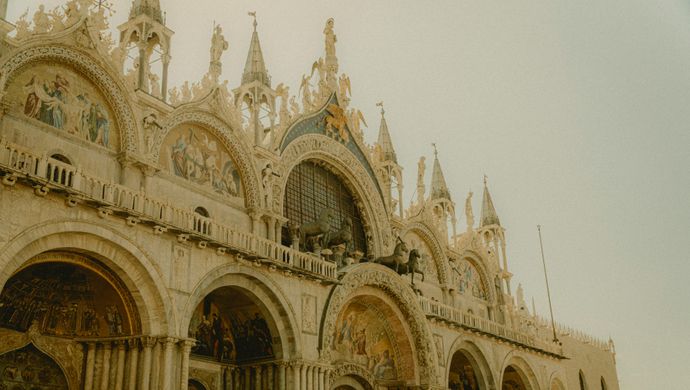
These reflections also led us to adopt a chamber-scale approach. Monteverdi’s music, fascinating and flamboyant as it is, has often encouraged an expansion of forces in modern performances: large choirs, lavish continuo groups, and the addition of instruments absent from the sources.Monteverdi’s later association with St Mark’s Basilica in Venice has contributed greatly to this monumental image. Yet one phrase on the title pageof the 1610 print particularly captured our attention: ad sacella sive Principum Cubicula accomodata — “adapted for chapels or the chambers ofprinces.” Such a statement seems to suggest a sound world very different from the one to which we have sometimes become accustomed.
The present performance therefore follows the vocal and instrumental forces specified by Monteverdi with the utmost care. Each vocal line is entrusted to a single singer, and the work is performed without a conductor in the traditional sense. This approach encourages constant listeningamong the musicians and fosters an especially direct relationship with the audience.
To approach a work as iconic as the Vespers of the Blessed Virgin today should not lead us to accept as self-evident a set of conventions that may infact be far removed from the context from which they emerged. Our ambition is neither to be original at all costs nor to claim possession of anydefinitive truth. We simply seek, in light of current knowledge, to suspend a few layers of interpretative sedimentation in order to rediscover awork still capable of surprising us. For Monteverdi’s modernity perhaps lies not in the image we have inherited of him, but in the enduring powerof his music to challenge the very way we listen.