



Welcome
to the oldest concert hall in the world
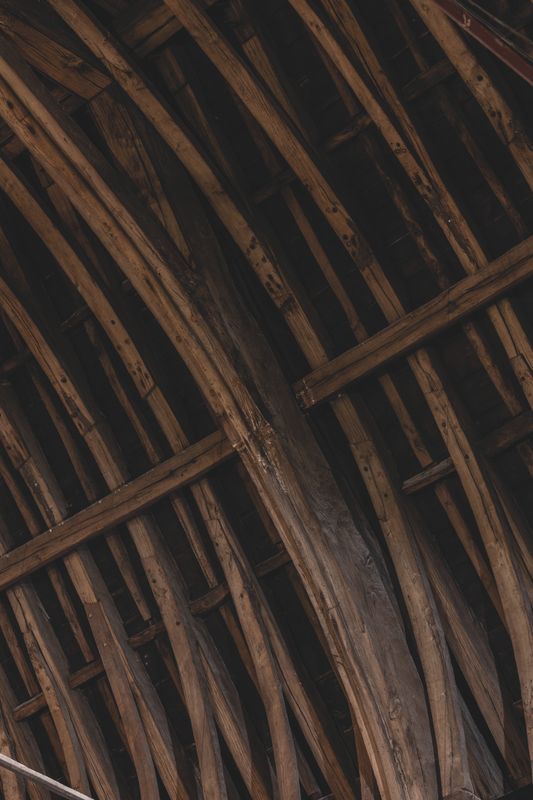
Muziekcentrum De Bijloke in Ghent presents classical, jazz, contemporary music, and festivals in the oldest concert hall in the world. Every note that resonates here was written down only after the iconic timber roof structure had been raised.
The majestic oak ceiling and the centuries-old walls form a hospital ward in 1251.
When the hospital moves elsewhere, enthusiasts take over the abandoned building, hosting the first classical concert in 1988. The exceptional unity of form and content proves to be a magical formula, confirmed by the City of Ghent in 1999 with the founding of the non-profit Stedelijke Concertzaal. For intimate concerts, the 16th-century Kraakhuis is incorporated, the annex where patients once received their final care.
Thanks to the world-renowned team behind the Sydney Opera House, Muziekcentrum De Bijloke rises again in 2020 as a state-of-the-art concert hall. From every seat, the acoustics are impeccable. In the new choir stalls, the audience sits almost on the stage itself. The Café and Foyer have been given a contemporary and ecological design by the Ghent-based collectives ONBETAALBAAR and Studio Helder, using repurposed leftover materials. The 19th-century Kabinet invites visitors to exhibitions. And with a historic chapel from 1276 serving as the cloakroom, even hanging up your coat becomes an experience.
Thus, De Bijloke is the oldest building in the world to be permanently and purposefully designed as a music centre. On top of the wonder of every concert comes that thrilling architectural blend of the centuries-old and the brand-new, a sensation you’ll find nowhere else. Except here, in Ghent. To shout it out in true 13th-century fashion: come hear, come see!
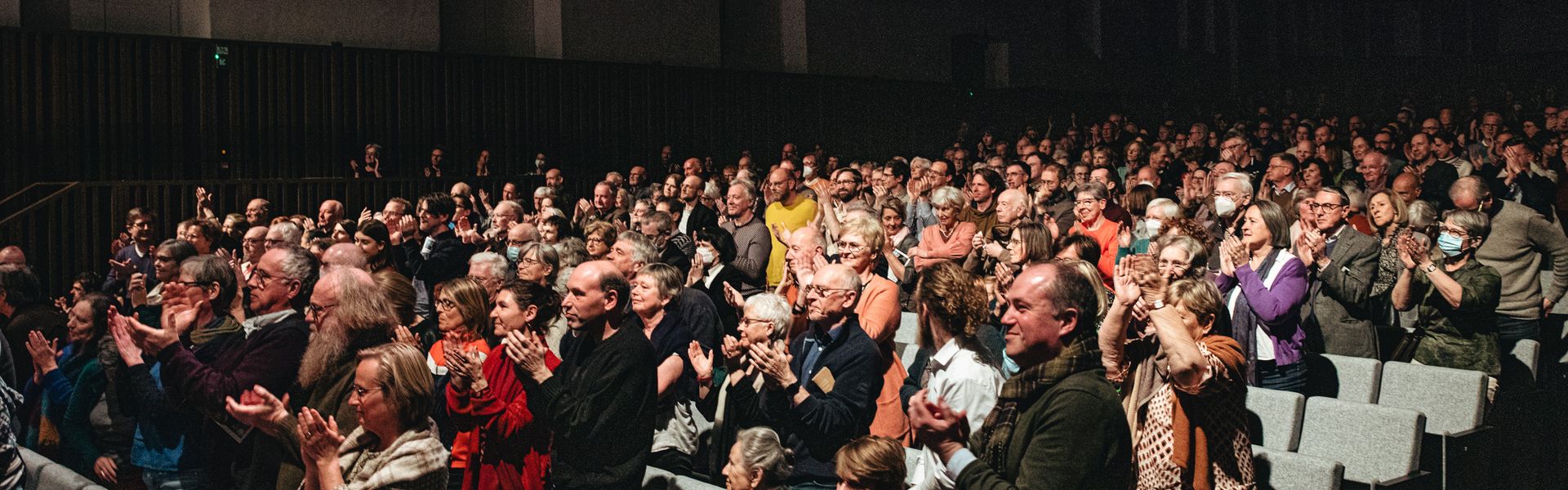
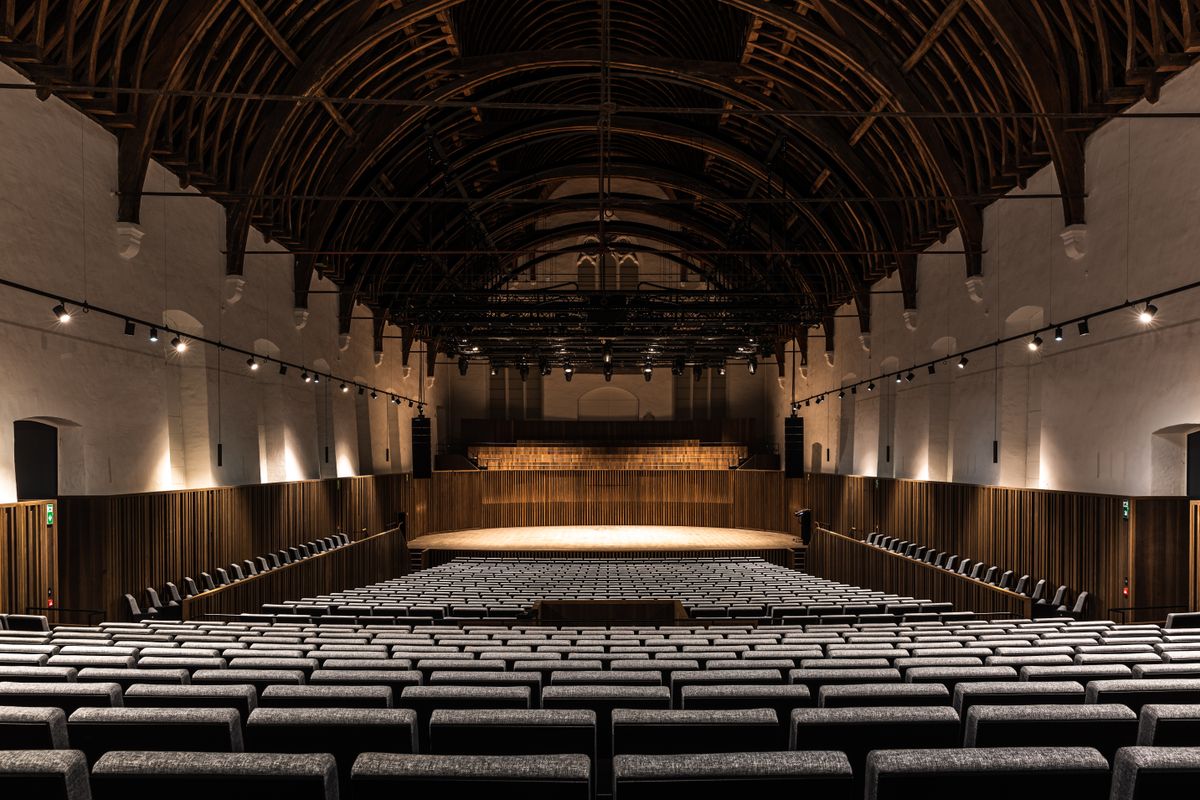
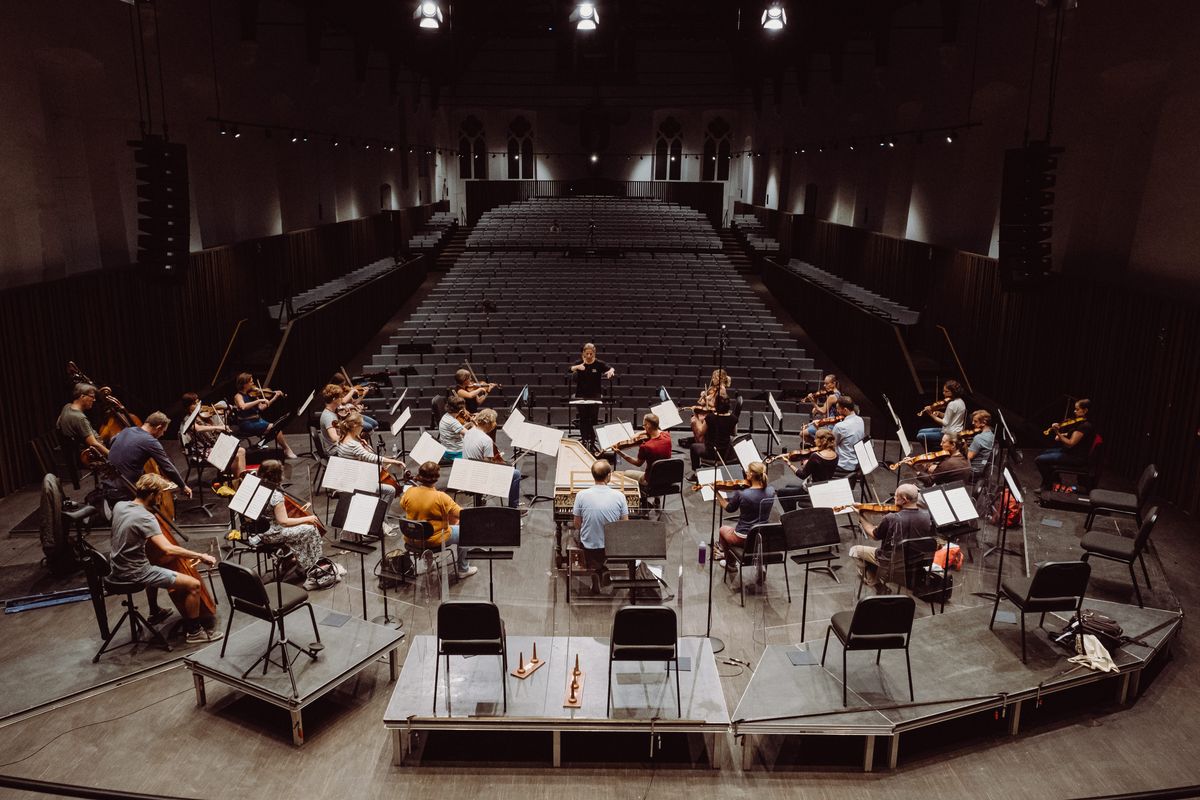
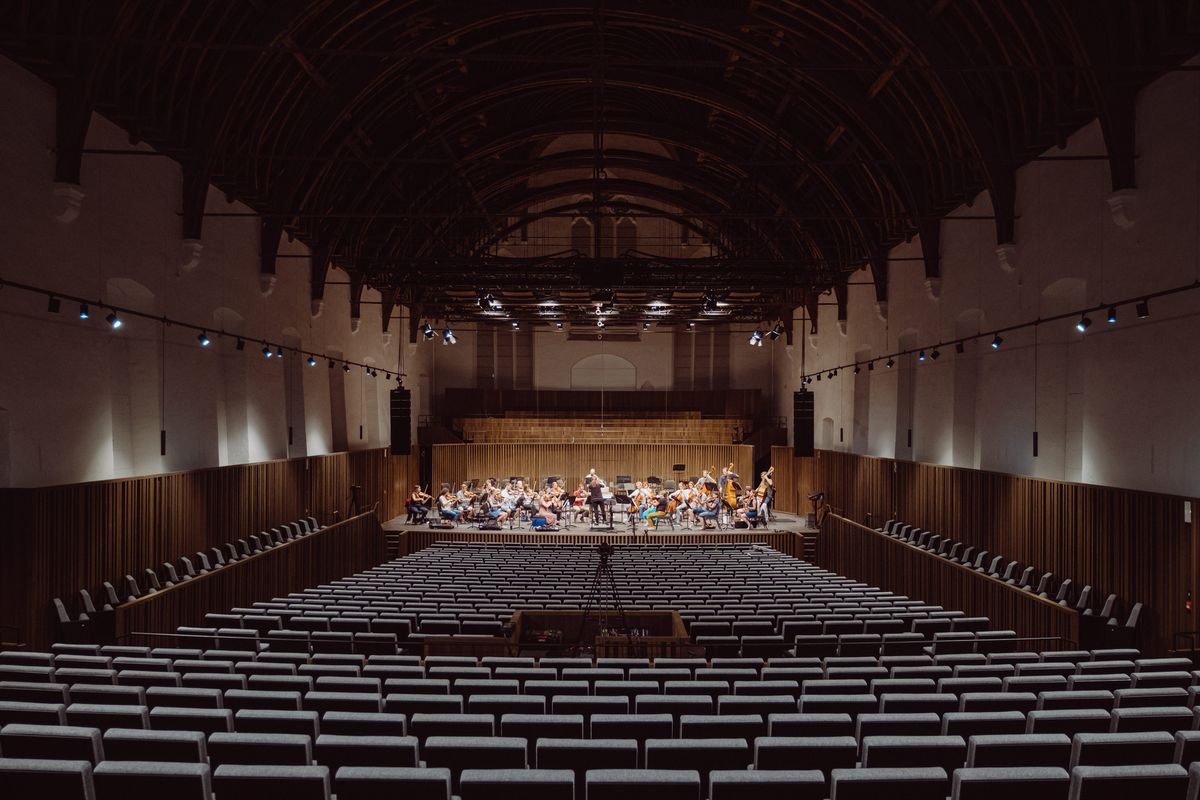
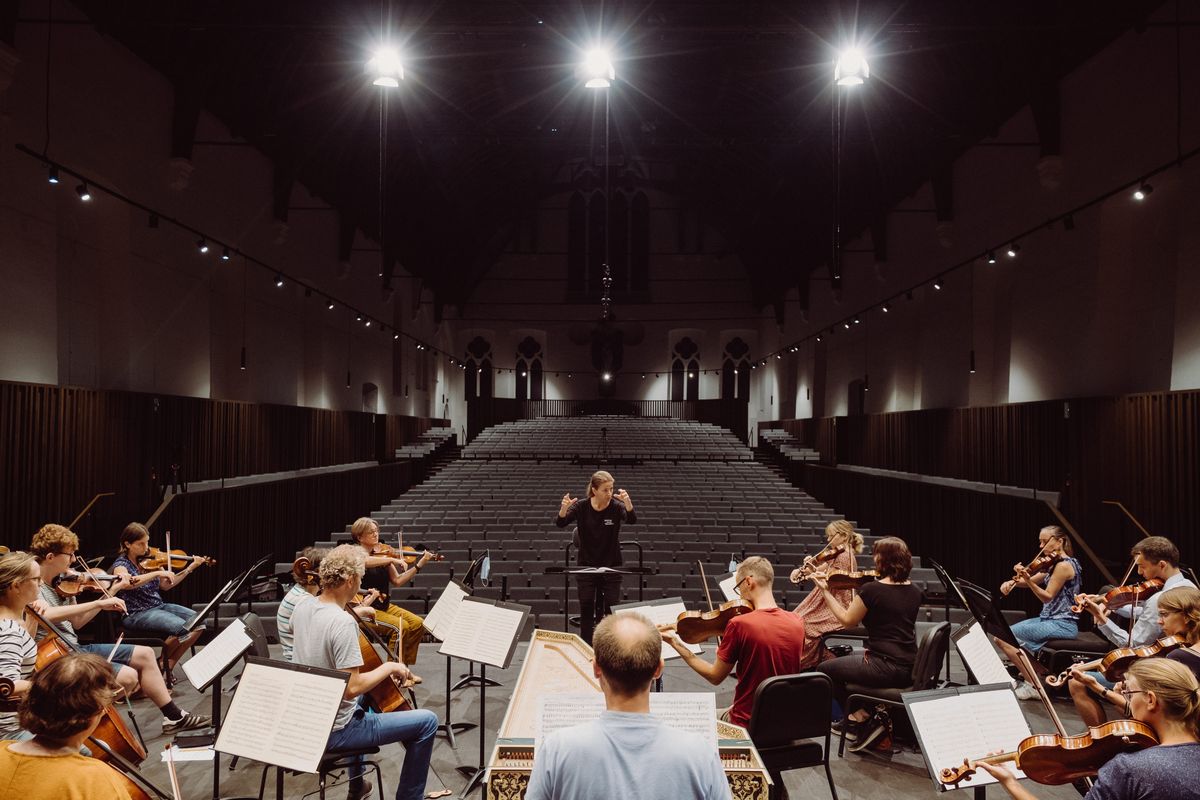
Priority number one during the renovation? Impeccable acoustics.
That’s why the commission went to the London acousticians of Arup—the absolute world elite—whose portfolio includes the Sydney Opera House, Oslo Opera House, and pop star Björk’s ingenious Cornucopia stage. They joined forces with the renowned London-based DRDH Architects (Bodø Kulturhus in Norway, Opera Ghent, Bourla Theatre in Antwerp) and the restoration experts of Julian Harrap (Neues Museum Berlin, Victoria and Albert Museum London). Not only will the acoustics make it feel as if you’re sitting on the musicians’ laps—you’ll actually be sitting much closer to the stage. And in the choir stalls, you can even claim a seat on the stage itself.
This state-of-the-art concert hall forms the beating heart of our Music Centre—but that’s far from all. The entrance now leads through our Café, which becomes a lively meeting place thanks to the original interior by Antwerp’s Studio Helder and ONBETAALBAAR, a Ghent-based collective that champions ecology and reuse. They also gave the Foyer a fresh new look, and with a historic chapel serving as the cloakroom, even hanging up your coat becomes a pleasure. In the Kraakhuis, you can experience our smaller concerts in a truly majestic setting.
Thanks to that thrilling architectural blend of the brand-new and the centuries-old, every performance easily transforms into the perfect night out. At the same time, it inspires us to think outside the box: a film concert, music theatre, an exhibition—everything in our new home fits seamlessly into the same story. Or think of pre-concert introductions, post-concert jazz jams, and lingering over drinks in the Café with friends or artists—going straight home after a concert will be quite the challenge.
Luckily, you really don’t have to. Our new Music Centre has so much to offer that you’ll want to come back again and again—and happily stick around a little longer each time. So come and savour all this ear-pleasing delight for yourself.








The world speaks of the oldest concert hall in the world

There’s nothing impersonal about this space, unlike many modern venues. Yet the sound is astonishingly natural — what you hear in the hall is precisely what the piano creates on stage.
Pianist Pavel Kolesnikov
Russia | 26.06.2021

I had the honour of performing in the beautiful Bijloke this evening — an incredible concert hall dating back to the 13th (!) century.
Pianist Víkingur Ólafsson
Iceland | 30.09.2021

When I perform at De Bijloke, I am their servant — submissive to their wonderfully beautiful acoustics, in which every centuries-old wooden beam sings along with every note I play. I breathe in the soul of this place.
Pianist Alex Koo
Japan/Belgium | 04.09.2021

The hall’s incredible acoustics were perfect for our recital. You could feel it — the warmth of the team, the audience’s deep connection, and above all that almost sacred atmosphere the place seems to breathe.
Soprano Véronique Gens
France | 27.11.2021

We were so looking forward to playing in your beautiful hall for the first time. That gorgeous space – it’s a real wow!
Jazzcomponiste Maria Schneider
United States | 15.12.2021
The renovation
The renovation of the Concert Hall in 2019–2020 was a major operation — quite literally so. To capture the scale of the transformation, we placed a camera high up in the roof, taking a photo every few hours for a whole year. You can watch the entire renovation unfold in a two-minute time-lapse video. Read more about the project here.
Ancient walls, contemporary music experience
Almost the entire press raved about the opening of our Concert Hall. Our new Music Centre offers a superb, contemporary concert experience in a centuries-old building — truly one of a kind in the world.
We aimed to create the very best hall for both audiences and musicians, and as Ghent’s only classical Music Centre, that was our ambition. The fact that a 13th-century hospital now serves permanently as a concert hall makes De Bijloke exceptional — not just in Flanders, but globally. Nearly every note played here today was written down only after the iconic wooden roof had been raised. Form and function in perfect harmony: a live music experience that truly delivers.
And there’s more: De Bijloke sets a new standard in acoustics, seating comfort, and sightlines to the musicians on stage. From every seat, the concert experience is outstanding.
13 Facts About #TheMostBeautifulHall
ARUP Acoustics: London’s top acousticians, are behind the Sydney Opera House and pop star Björk’s ingenious Cornucopia stage.
DRDH Architects from London also designed the Bodø Kulturhus in Norway.
The stage was moved forward so that even the back rows are right in the middle of the concert experience. Choir stalls were placed behind the stage, giving the audience a unique view over the performers.
720 hall seats and 110 choir-stall seats replaced the original 975 seats. Less quantity, more quality, with optimal sightlines from every seat.
The floor was excavated by 1.2 meters. The larger volume ensures state-of-the-art acoustics.
The 13th-century walls had shifted over centuries, deflecting sound upwards. The solution? Beautiful new paneling against the historic stone walls.
The “room within a room” formed by the wooden floors, walls, and ceiling acts like a violin’s soundbox, making the music as rich as possible.
The iconic roof, originally built using a whole Walloon oak forest in the 13th century, used to absorb too much sound. Thanks to the lowered floor and new paneling, this issue is solved—while the roof remains fully intact in all its grandeur.
The paneling ensures the perfect balance between sound absorption and reflection, placing every audience member right in the heart of the performance.
Acoustic reflection panels above the stage can be finely adjusted, optimizing the sound not only for the audience but also for the musicians.
Italian-made seats feature luxurious upholstery for maximum comfort, with wooden armrests and undersides designed for acoustic reflection.
The Café and Foyer received an original interior by Antwerp’s Studio Helder and the Ghent collective Onbetaalbaar, which prioritizes ecology and material reuse.
The historic chapel now serves as a cloakroom. Which other concert hall can say that?
Interview with architect David Howarth (DRDH) and acoustician Ned Crowe (Arup)
“This hall immerses you in the music.”
How do you transform a medieval building with thick stone walls and a heavy wooden roof structure into a modern music center with optimal acoustics? A top London team, DRDH Architects and Arup Acoustics, left nothing to chance. “We even excavated the floor: the stage and the tiered seating are now 1.2 meters lower than the rest of the hall.”
How many concert halls can claim to have lasted eight centuries? Ghent’s Music Center De Bijloke is without a doubt unique. Not that the building has always been a music center. In 1251, it was constructed as a hospital and run by a congregation of Catholic sisters. In old photographs, you can see patients lying in beds in the large open space beneath the wooden roof structure—so massive that an entire oak forest would have been felled in southern Belgium to build it.
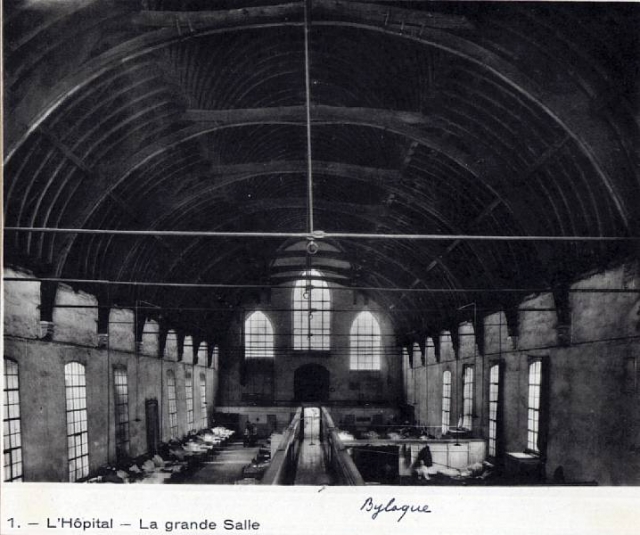
In the centuries that followed, the building served various functions, but it also stood empty for long periods. In 1988, the space was used as a concert hall for the first time, but after thirty years, a thorough renovation proved necessary. “The acoustics no longer met modern quality standards,” explains Geert Riem, director of De Bijloke. “Sightlines were also problematic. Those seated at the back could only see the head of the person in front of them. Moreover, the building was not very accessible for wheelchair users. We decided to hold a competition and made it a requirement that an acoustical engineer be part of the winning team.”
Close to the audience
A team consisting of the London firms DRDH Architects, Julian Harrap Architects, and Arup Acoustics, in collaboration with Belgian engineering offices ABT and RCR, won the architectural competition. DRDH Architects and Arup Acoustics have collaborated on numerous top concert halls worldwide. The duo previously worked on the Bodø Kulturhus in Norway, and they are currently involved with the Opera in Ghent and the Bourla Theatre in Antwerp.

Even so, the renovation of De Bijloke proved a major challenge for this experienced team. “Over the past eight hundred years, the thick stone walls have shifted, causing sound to bounce above the heads of the audience,” explains Ned Crowe (pictured left) of Arup from London over the phone. “Whereas the goal is precisely to immerse the audience in the music. Early reflection is crucial because you want to bring the music close to the people.”
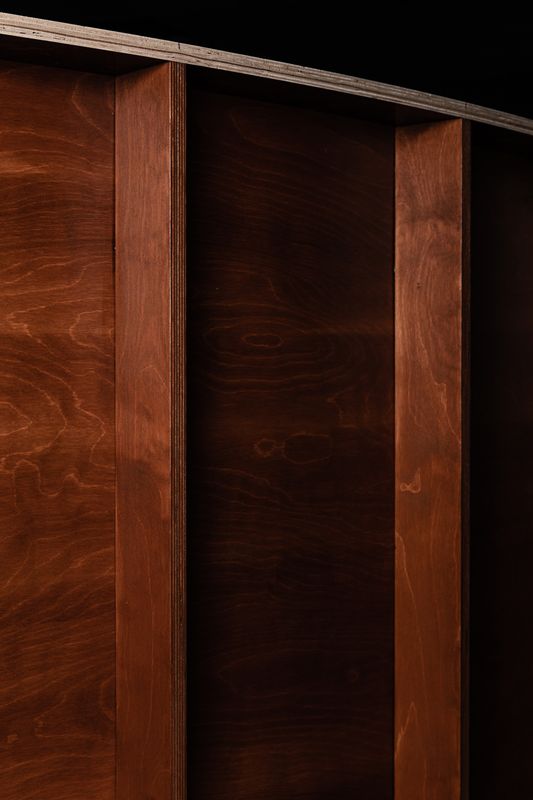
To optimize sound reflection, Arup decided to install wooden paneling along the old stone walls. But that was only part of the solution. “The cavity between the stone walls and the paneling initially reflected only the high frequencies while absorbing the low frequencies. We neutralized the cavity by gluing and screwing the wooden slats in place.”
Intimiteit
A similar problem occurred at the underside of the roof. “The wooden structure is beautiful and must absolutely be preserved from a historical perspective, but the large surface area and natural cracks in the wood absorb sound—and that’s exactly what you don’t want in a concert hall,” explains Crowe. “That’s why we removed as much sound-absorbing material from the space as possible, such as the curtains on the walls, the carpet on the floor, and the upholstery on the chairs.”
“The new chairs have wooden armrests, backrests, and undersides, which reflect sound. The sound-absorbing cushions on the seats are compressed when someone sits down. The new floor is made of heavy calcium sulfate panels with a wooden finish, which increases the acoustic warmth of the space. When building a concert hall, everything revolves around achieving an optimal reverberation time. Before the renovation, the reverberation time was poor due to sound-absorbing surfaces and the size of the room.

“That’s why we decided on a major renovation and lowered the floor of the concert hall,” says David Howarth, director of DRDH Architects (pictured right). “The stage and tiered seating are now 1.2 meters lower than the rest of the hall. A larger volume helps to optimize the natural reverberation time of the space. At the same time, a lower stage is more practical. Large instruments or other equipment can now be brought onto the stage without a lift.”
The intervention was also necessary to increase the intimacy of the space, Howarth continues. “The concert hall is 55 meters long. The audience in the back rows risked losing contact with the performers on stage. To address the need for intimacy, we brought the orchestra platform forward and placed several choir benches behind the stage. The audience now sits closer to the stage, even in the back rows. And when you see spectators or a choir behind the orchestra, it immediately feels more intimate.”
A Warm Sound
A little over a year after the renovation began, De Bijloke looks completely different. The wooden walls give the hall a much warmer appearance than the white stone walls that initially dominated. Wood is a material often used in spaces where acoustics are a priority. Crowe explains: “By using the right thicknesses, densities, and installation methods, you can create a warm sound with wood.”
Wooden reflectors hang above the stage. These help musicians hear each other and support communication between the choir and the orchestra. The reflectors also project the sound of string and woodwind instruments to the audience. “The size and location of the reflectors were extensively tested during the design phase using an acoustic model. During the first performances, we will further fine-tune the position of the reflectors,” says Crowe.
Despite the attention to early reflection and reverberation time, the hall can also be used for amplified or non-acoustic concerts. In such performances, the sound engineer will want to minimize reverberation to maintain full control over the sound. Sound-absorbing curtains are then hung behind the stage to control echo.
The best of both worlds
During the renovations, not only was the large former hospital hall transformed, but audience circulation was also improved. The music center now has two entrances, each with a reception area, bar, cloakroom, and restrooms, so the audience no longer has to walk across the building. The total renovation cost seven million euros.
Director Geert Riem is very satisfied with the result. “As with any large construction project, you have to make choices because the budget is limited. We always prioritized the acoustics. That was non-negotiable. Arup’s plan was executed in full.”
According to Riem, the greatest asset of the project is that the London duo succeeded in preserving the historical character of the building while creating a modern concert hall. Riem says: “For a long time, we saw the historical character as a disadvantage. It limited the changes we wanted to make. But when Ned Crowe and David Howarth visited De Bijloke for the first time, they were enthusiastic. At De Bijloke, we have the best of both worlds: the charm of a historic building combined with the refined acoustics of a modern music center. It’s a dream come true.”
Text: Janine Meijer