

Keep saying 'yes'
A contribution by Matthew Barley
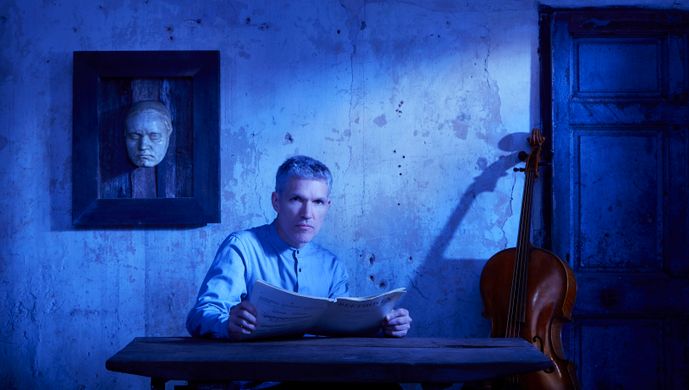
When the Amsterdam Cello Biennale invited me to create a new project, I embarked on a journey that eventually became '51 Strings'. What began as a simple idea grew into a meeting of four musical traditions, four distinct personalities, and a shared love of sound, curiosity, and improvisation.
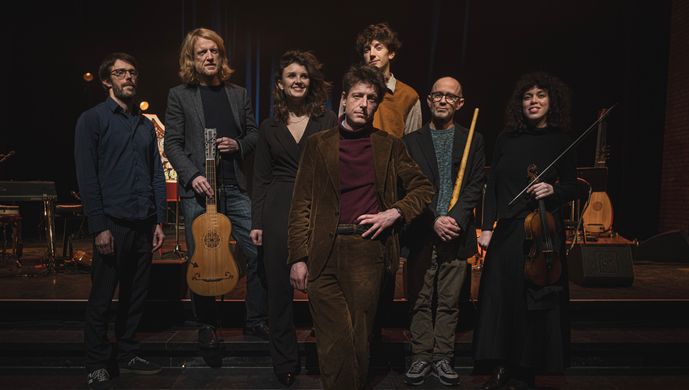
The title refers to the 51 strings of the instruments brought together on stage. Alongside my cello, you will hear the Finnish kantele, an enchanting table harp, the West African kora, and the Brazilian berimbau. Each instrument carries centuries of history, yet they are not placed side by side as museum pieces. They are active voices in a living musical conversation.
Bringing this quartet together took almost two years. I wasn't looking for famous names, but for people with whom a genuine musical and human connection was possible. Improvisation lies at the heart of this project. Before the four of us ever met as a group, I spent time with each musician individually, discovering how our musical voices might relate to one another. Only when those encounters felt right did I know this adventure had a chance of succeeding.
In '51 Strings', we are constantly moving between composition and freedom. Some passages are fully written out; others emerge entirely in the moment. Between these are what I like to call “designed improvisations”: musical landscapes with recognisable contours, but enough space for spontaneous discoveries. We know where the journey begins and where it ends, but the path between those points changes every night.
The thread running through the programme is a set of four lullabies from the countries we represent: England, Finland, Brazil, and The Gambia. During my research, I discovered something fascinating. Lullabies may have simple melodies designed to send children to sleep, yet behind this gentle music often lie remarkably dark texts. Fear, grief, exhaustion, and uncertainty are expressed with surprising directness. The English 'Rock-a-bye Baby' tells of a child in danger of falling from a tree; a Gambian lullaby warns of the frightening figure Kuribamba; and in Brazil, a mythical creature is invoked to persuade children to sleep. Perhaps most striking of all is the Finnish song, in which a mother would rather see her child dead than condemned to a life of hardship. It is precisely this contrast between soothing melodies and unsettling words that moves me so deeply. It made me realise that a lullaby is not only intended to comfort a child, but can also serve as an intimate moment in which a parent gives voice to fears, worries, and hopes.
That duality became a source of inspiration for us. We created new arrangements of these traditional melodies, allowing their hidden emotions to resonate through our own music. At times the result is intimate and reflective; at others, raw and confronting. In counterpoint to these moments are energetic, often improvisatory passages drawing on African and Brazilian groove traditions. The result is a programme that constantly balances contemplation and movement, shadow and light.
Perhaps that is the essence of '51 Strings': listen to one another, dare to take risks, and above all, keep saying yes. Yes to unfamiliar ideas. Yes to unexpected encounters. Yes to the creative leap whose destination nobody can predict. For me, that is where the true spirit of music resides.