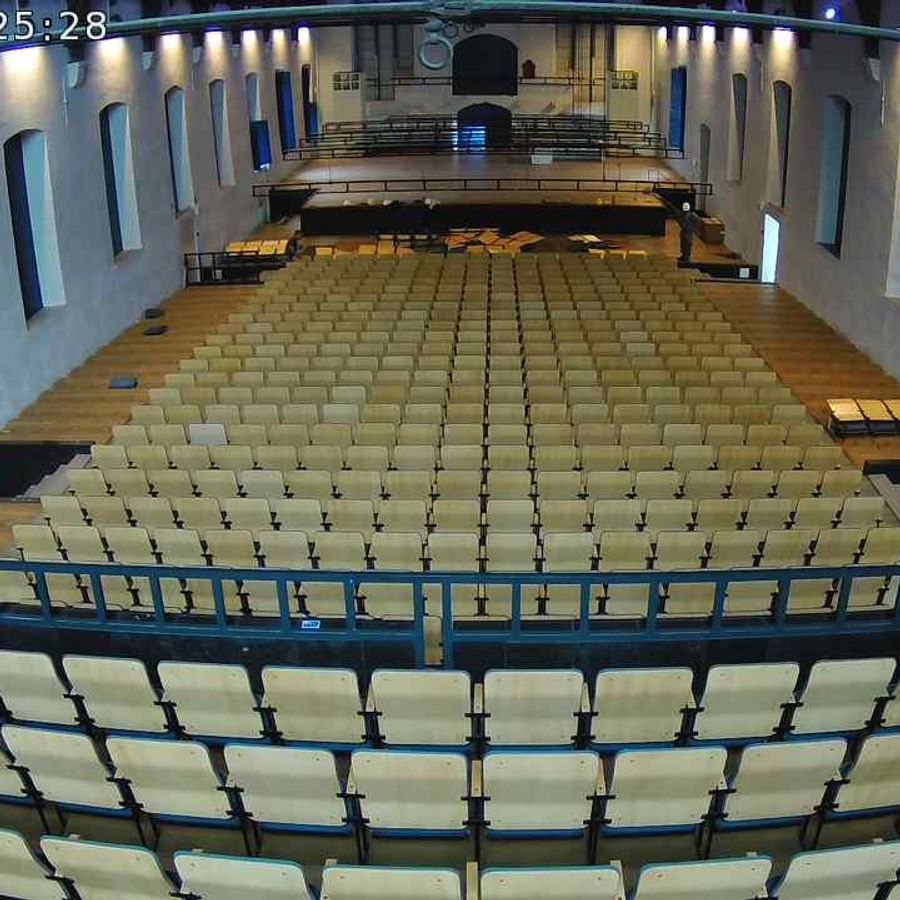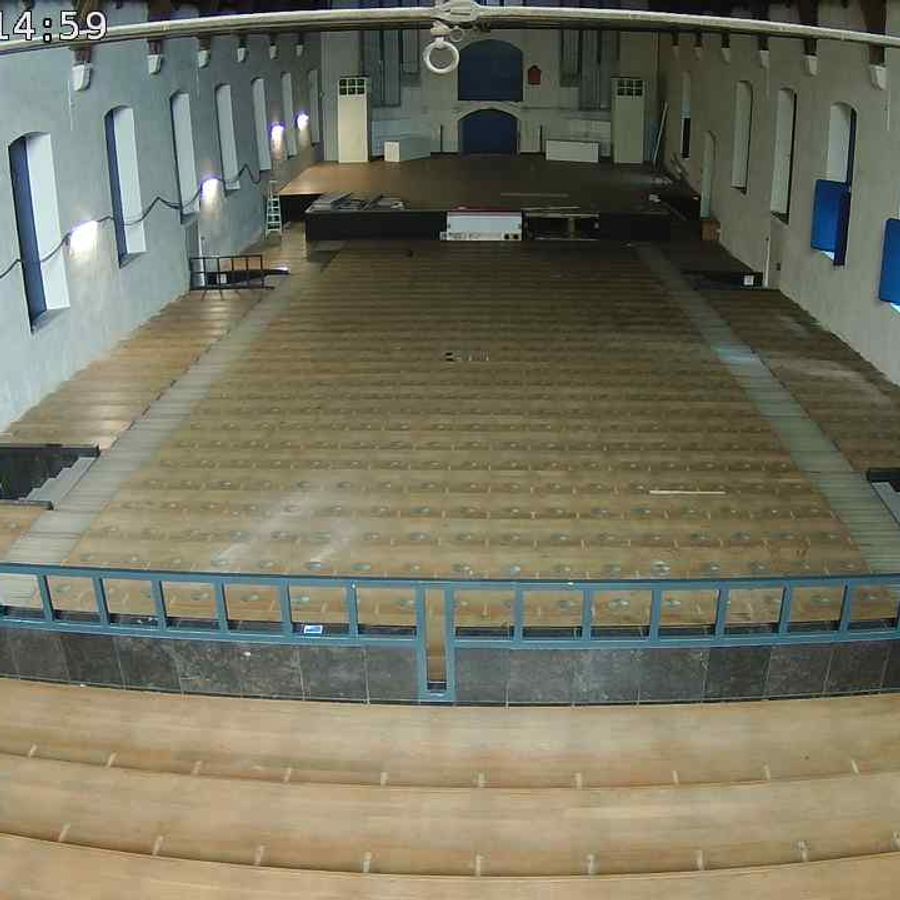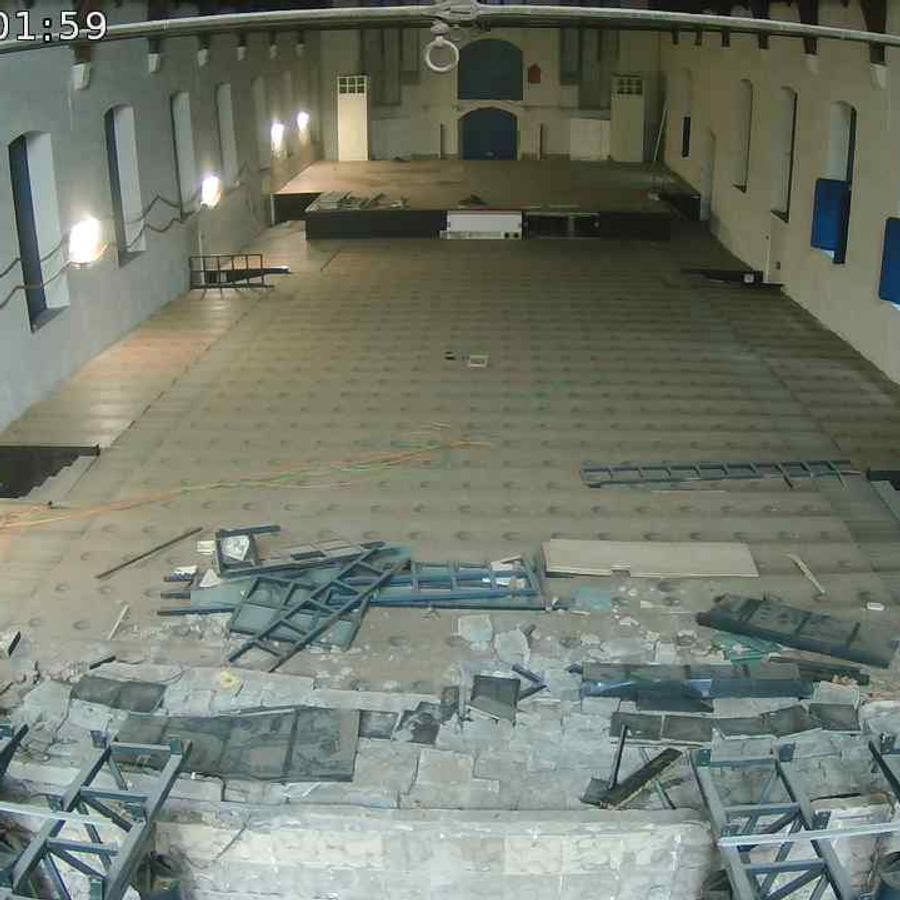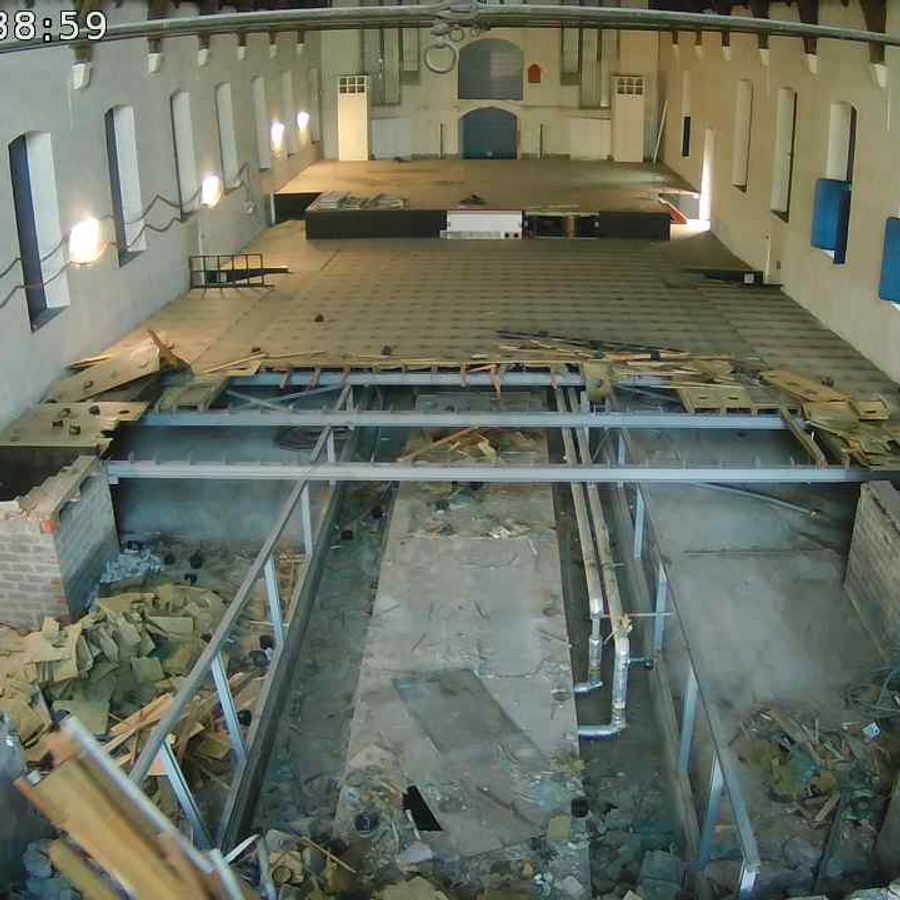



A look at the shipyard
Working on such a monumental building on such a scale is, of course, truly impressive and a job for a specialist team of contractors. It’s the sort of renovation you don’t often get to see. That calls for a photo report!
Phase 3: Roof, walls, stage
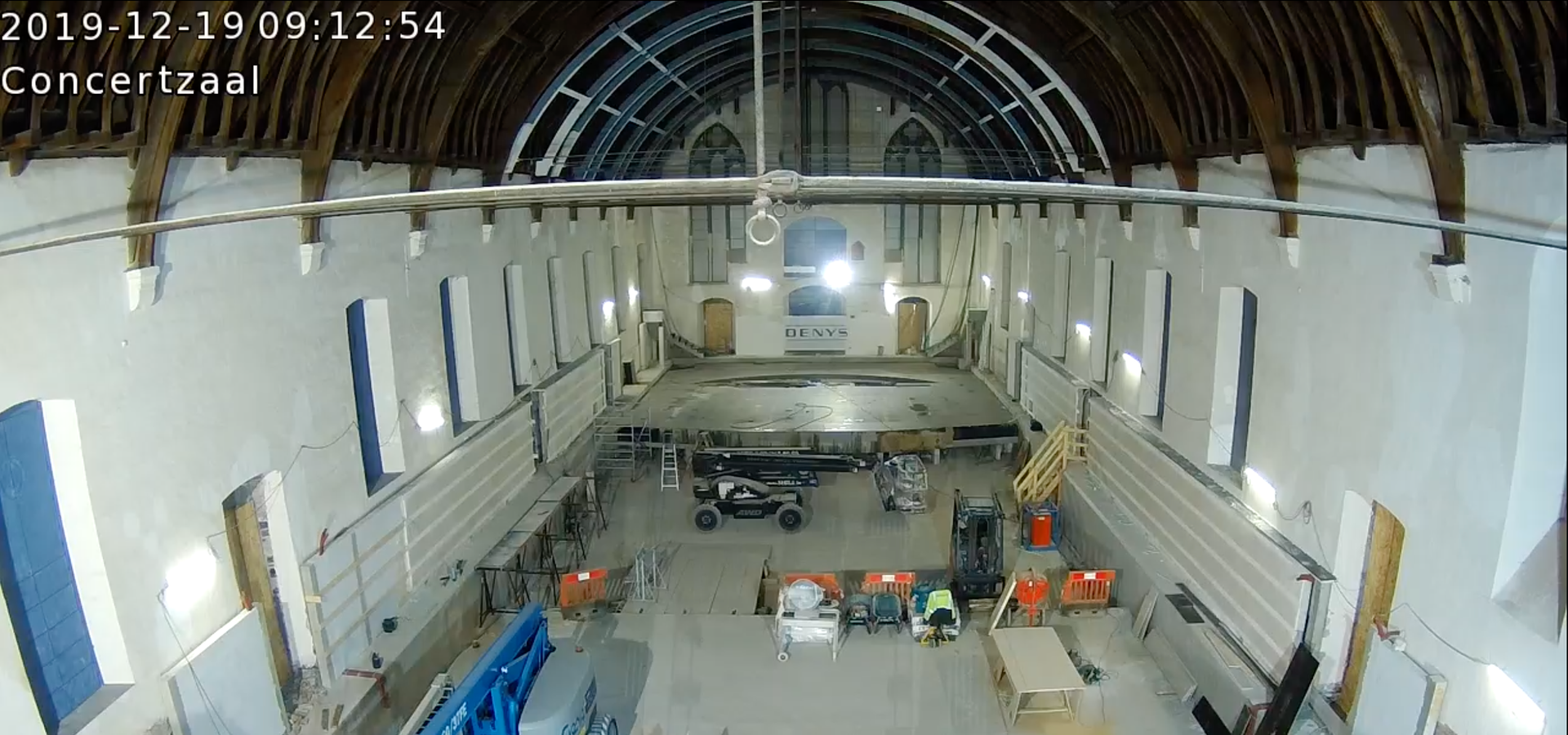
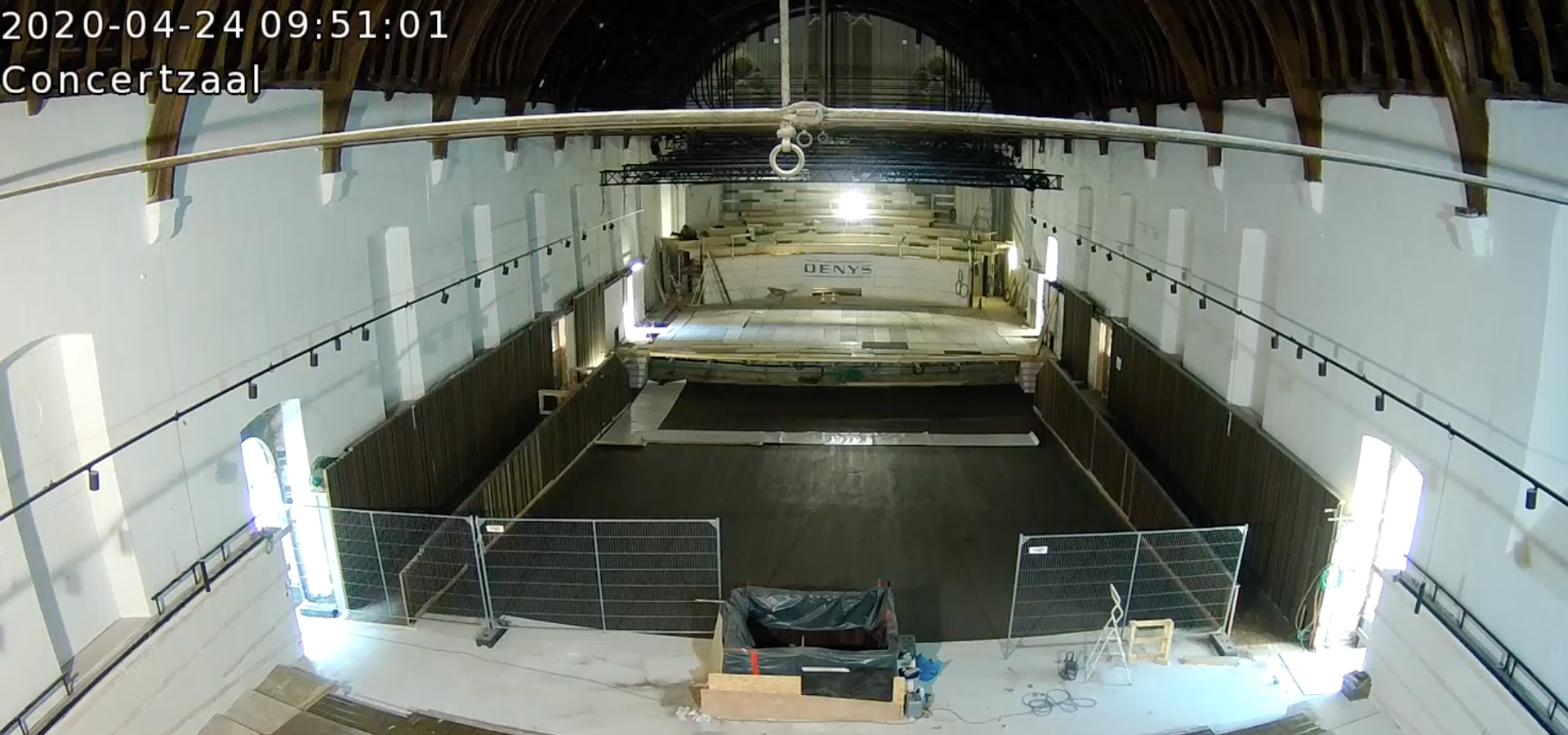
One of the most delicate operations during the works is the installation of the technical structure above the stage. To relieve the load on the medieval roof truss, a steel truss is being installed that is capable of supporting a modern (and heavy) theatre technical installation. First coated in a fire-resistant primer, then painted black so that the structure no longer stands out. The extensive cabling (more than 200 cables) was also laid almost invisibly in enclosed black cable ducts running through the roof structure.
At the same time, the raised foundation boxes were cast in concrete; the galleries will be built over these. The final concrete addition is the stage. The decision to construct this in concrete is for acoustic reasons. A hollow wooden stage vibrates in response to the low frequencies of an orchestra, which disrupts the sound balance. The acoustic engineers opted for a concrete structure with a wooden floor on top.
The wooden panelling and parquet flooring were then laid on top of the concrete surfaces. Once the parquet had been laid on the stage, the theatre technicians were able to begin installing the technical equipment above the stage.
Phase 2. Archaeology, excavation and new floor slab
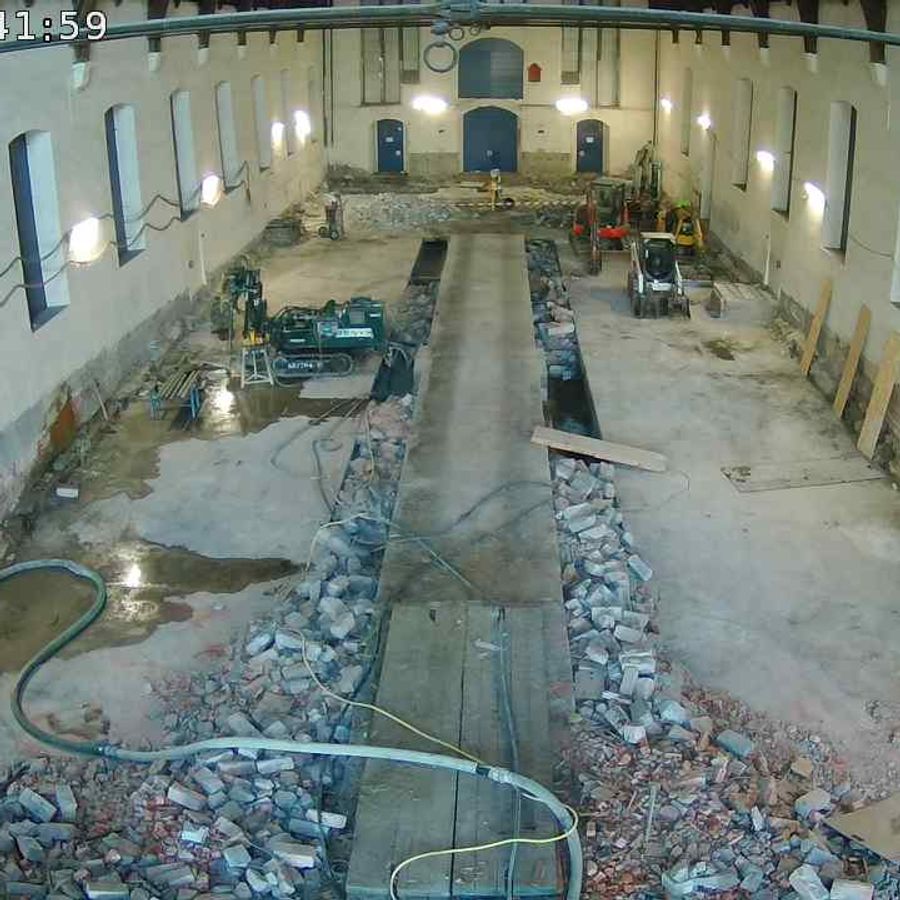
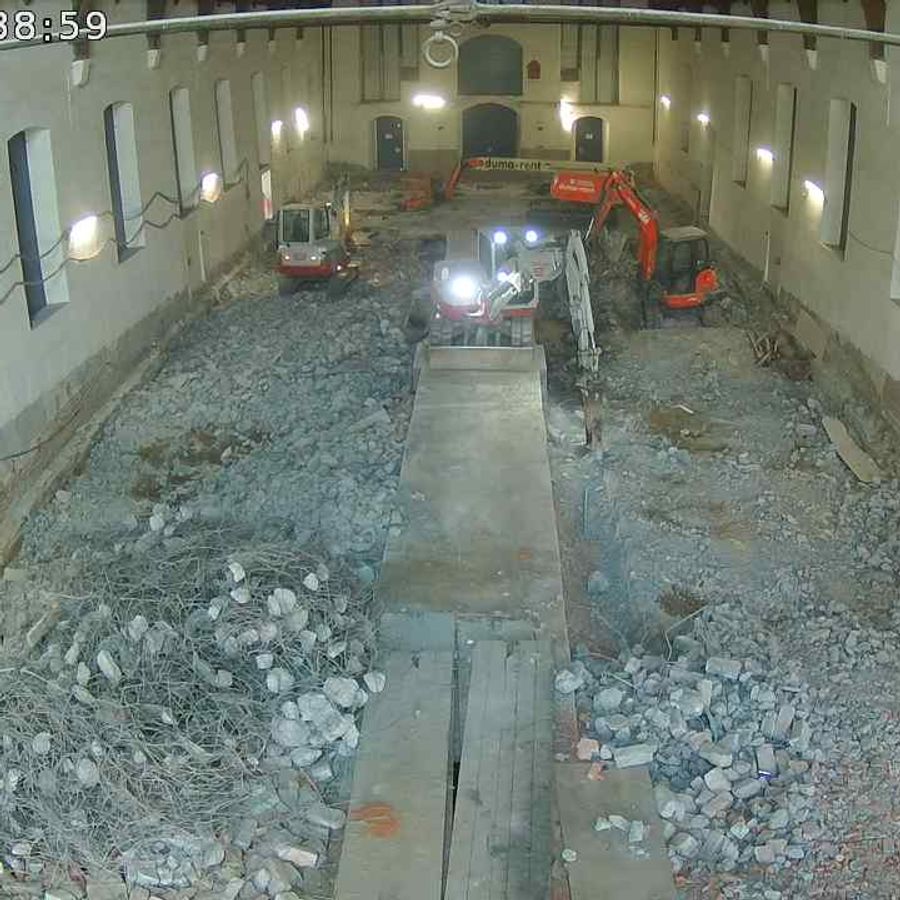
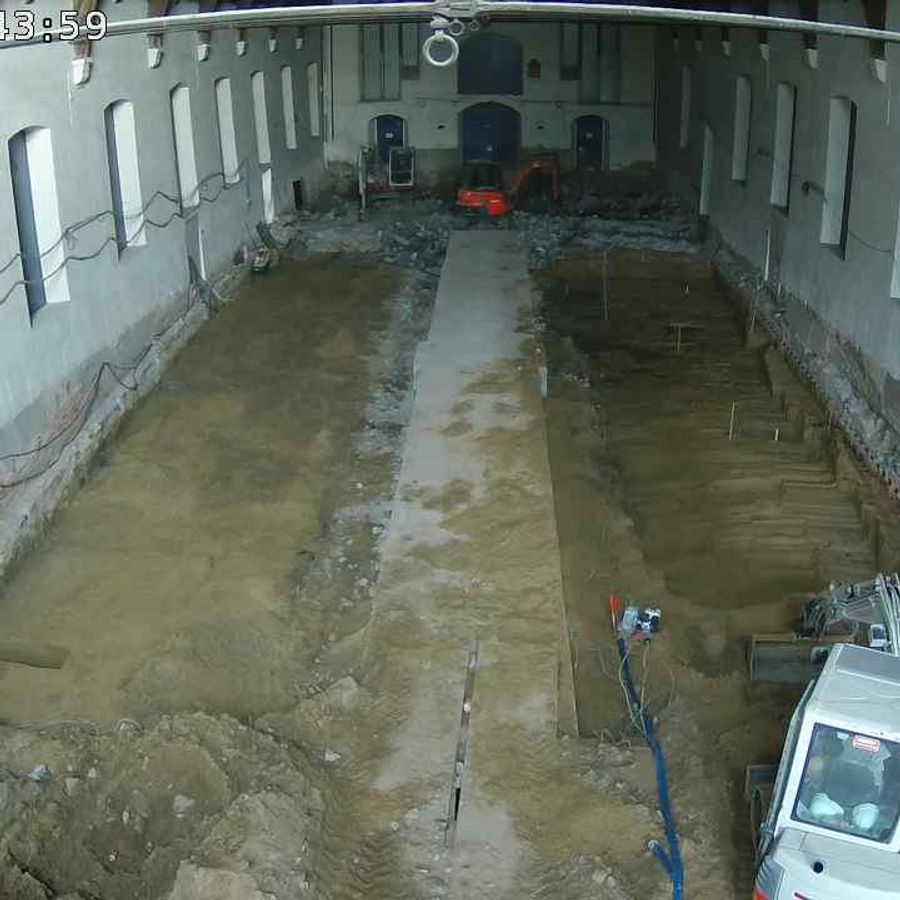
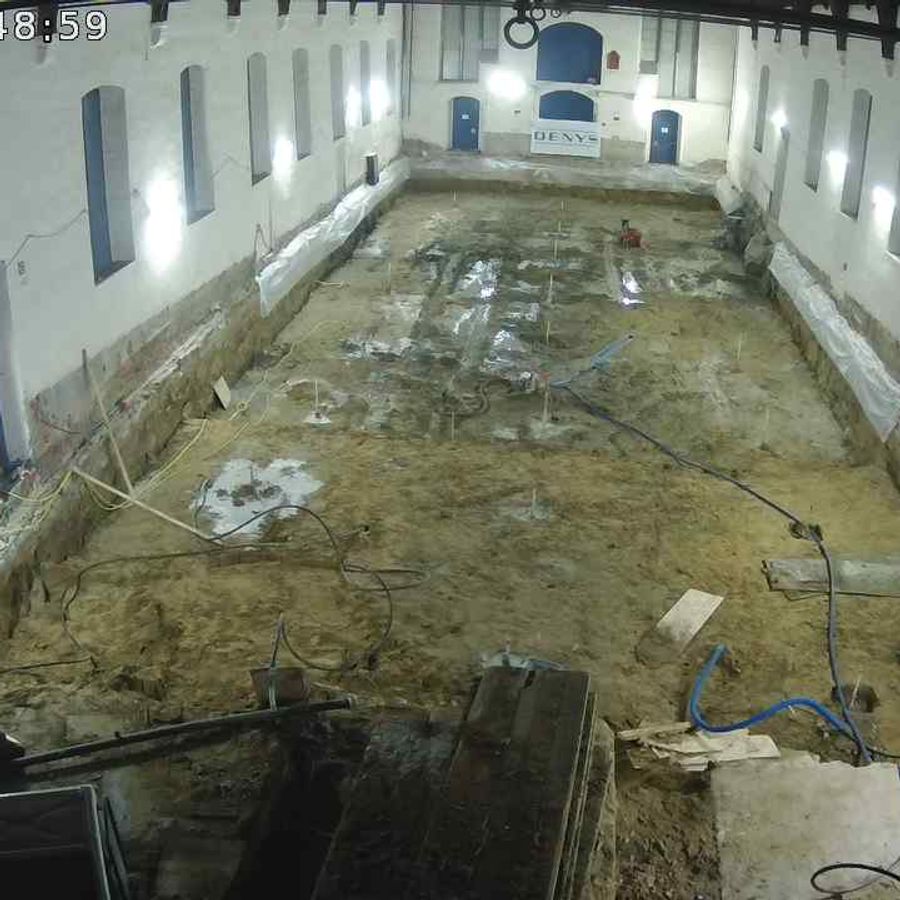
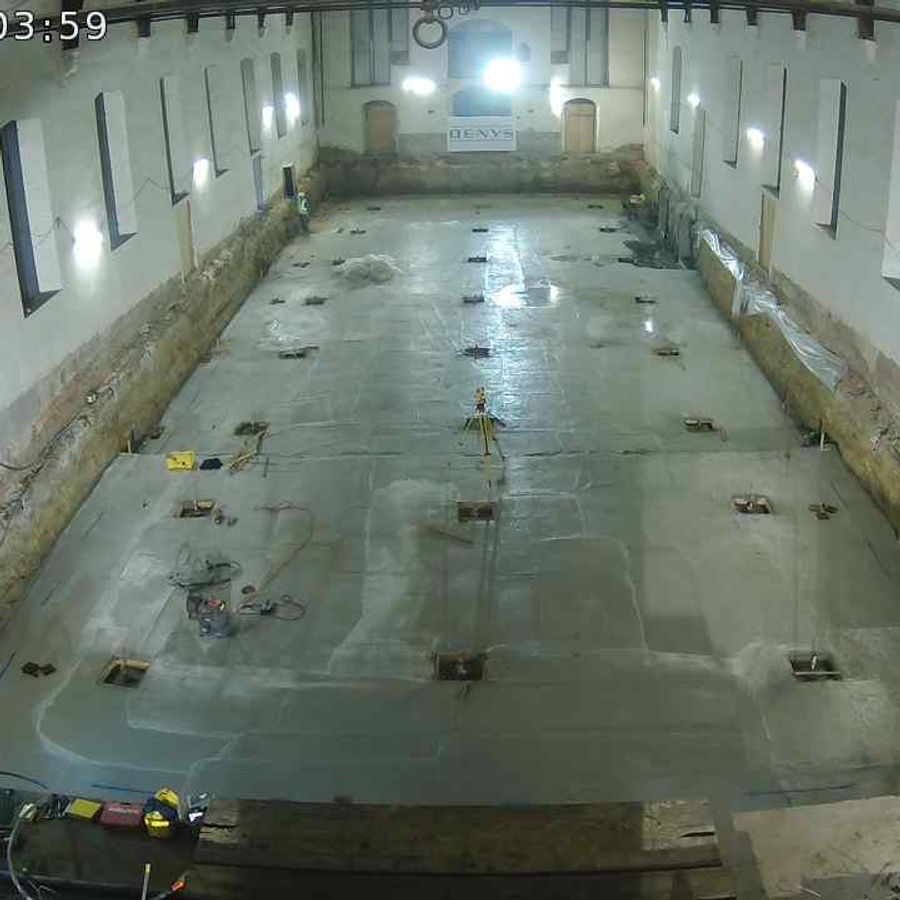
In a second phase (September–October), the subsoil was subjected to an archaeological survey by a team of specialists from Ghent University. The ground was then excavated to a depth of 2.20 metres and fitted with a new reinforced concrete floor slab. This excavation offers two major advantages:
1. Accessibility: the public seating area will be situated considerably lower, meaning that both the stage and the central entrance doors to the auditorium will be at the same floor level as the surrounding foyers. All thresholds and steps can thus be removed, ensuring (wheelchair) accessibility to the new auditorium.
2. Acoustics: the volume of the auditorium will increase significantly, bringing the natural reverberation time of the space to an ideal 1.7 seconds.
Phase 1. Demolition of the tiered seating, floor and stage
+ reinforcement of the foundations
In the first phase, the existing interior of the Concert Hall was completely stripped out. The theatre equipment and seats were removed, and the tiered seating and balcony were demolished. The foundations were then reinforced, as shown in the series of photos below: