


Christie Dashiell: "In the fight for freedom, every voice counts"
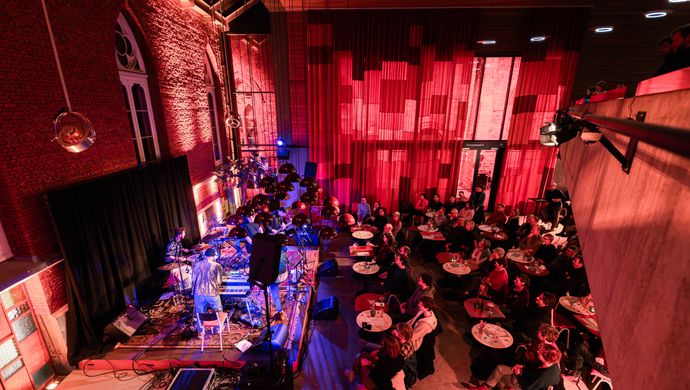
In 1960, drummer Max Roach and singer Abbey Lincoln released 'We Insist! Freedom Now Suite', a landmark album that brought jazz into conversation with the civil rights movement and artistic protest. More than six decades later, drummer and bandleader Terri Lyne Carrington revisited this powerful repertoire with 'We Insist 2025'. Singer Christie Dashiell takes on the role of Abbey Lincoln, not by imitating her, but by bringing her own voice and perspective to the music. On October 23, Carrington, Dashiell and their band will perform the project at Music Centre De Bijloke in Ghent.
We spoke to Christie Dashiell about Abbey Lincoln’s legacy, the enduring relevance of the music, and the many ways in which artists can give voice to freedom and resistance.
You’re working with Terri Lyne Carrington on 'We Insist 2025'. How did you first meet?
“Terri and I met through one of my mentors, Diane Reeves. As a jazz student, I had known and admired both Diane and Terri’s work for a long time. Diane told me that Terri was someone who really takes young artists under her wing, nurtures their talent and opens doors for them. That’s how we started working together, first at a Christmas concert in 2023. We clicked right away.”
“Later, I applied for the Next Jazz Legacy programme, which Terri leads. Participants choose two mentors: one who guides them musically and another who offers more professional advice. I asked Terri if I could be her mentee in her band. That’s how I started playing with her and singing music from her 'New Standards' project.”
“As Max Roach’s centennial approached, Terri told me she was thinking about reimagining 'We Insist!'. She asked me if I would take on the role of Abbey Lincoln. I was honestly shocked. I had always looked up to Terri so much, and to be asked to collaborate with her as a co-leader on a project like this felt incredibly humbling.”
“At the same time, I was scared. Abbey Lincoln has such an enormous legacy. To me, her voice embodies rawness and truth, and I felt that I still had some growing to do as a singer before I could fully step into that space. But by immersing myself in this music, I actually discovered a deeper truth in my own artistry.”
How relevant are the themes of 'We Insist!' today?
“Extremely relevant. We recorded the album just a few months before the 2024 US presidential election. At the time, we were mainly focused on reimagining such a historic album. It was only afterwards, when we saw the election results, that the themes seemed to take on an even greater sense of urgency.”
“It’s about racial inequality, freedom and human dignity. Tears for Johannesburg originally addressed apartheid, but the issues of oppression and violence are still very much present today, including in the Middle East. The themes surrounding women, their bodies and their autonomy are also particularly relevant. Unfortunately, the lyrics still feel very familiar.”
The new version sounds less aggressive to me than the original. Is that a different way of searching for freedom?
“I think so. Music has evolved, just as the way we look at the world and process events has evolved. But it wasn’t a conscious decision to make the album softer. Above all, we wanted to stay true to our own musical identities.”
“I definitely didn’t want to imitate Abbey Lincoln. Her voice has a very distinctive rawness, with beautiful textures and colours. My voice is different. So I felt the best way to honour her wasn’t by trying to sound like her, but by fully inhabiting my own voice and following my own truth. Perhaps that difference naturally gives the music a softer quality.”
And yet the message remains the same, regardless of who sings it.
“Absolutely. We all carry that message in our own way. Some people are thinkers, others are doers. Some are on the front lines, while others create the art that becomes the soundtrack to resistance. In the struggle for freedom, we need all those different voices. Everyone finds their own way of resisting.”
In October, you’ll bring 'We Insist 2025' to Music Centre De Bijloke in Ghent. What changes when you perform this music live?
“A live performance always brings something different out of the music. In the studio, I want the recording to be technically right. You know you’re making a take, and because of that, you sometimes take fewer risks. On stage, it’s different. You get an immediate response from the audience, and that energy feeds into the whole band.”
“When we perform 'We Insist' live, the music has more room to breathe. We take more risks, and the music keeps evolving the more we play it. At the same time, the core remains the same: resistance, freedom, and freedom for everyone. I love that on stage, we can approach that message with a little more flexibility and spontaneity.”